



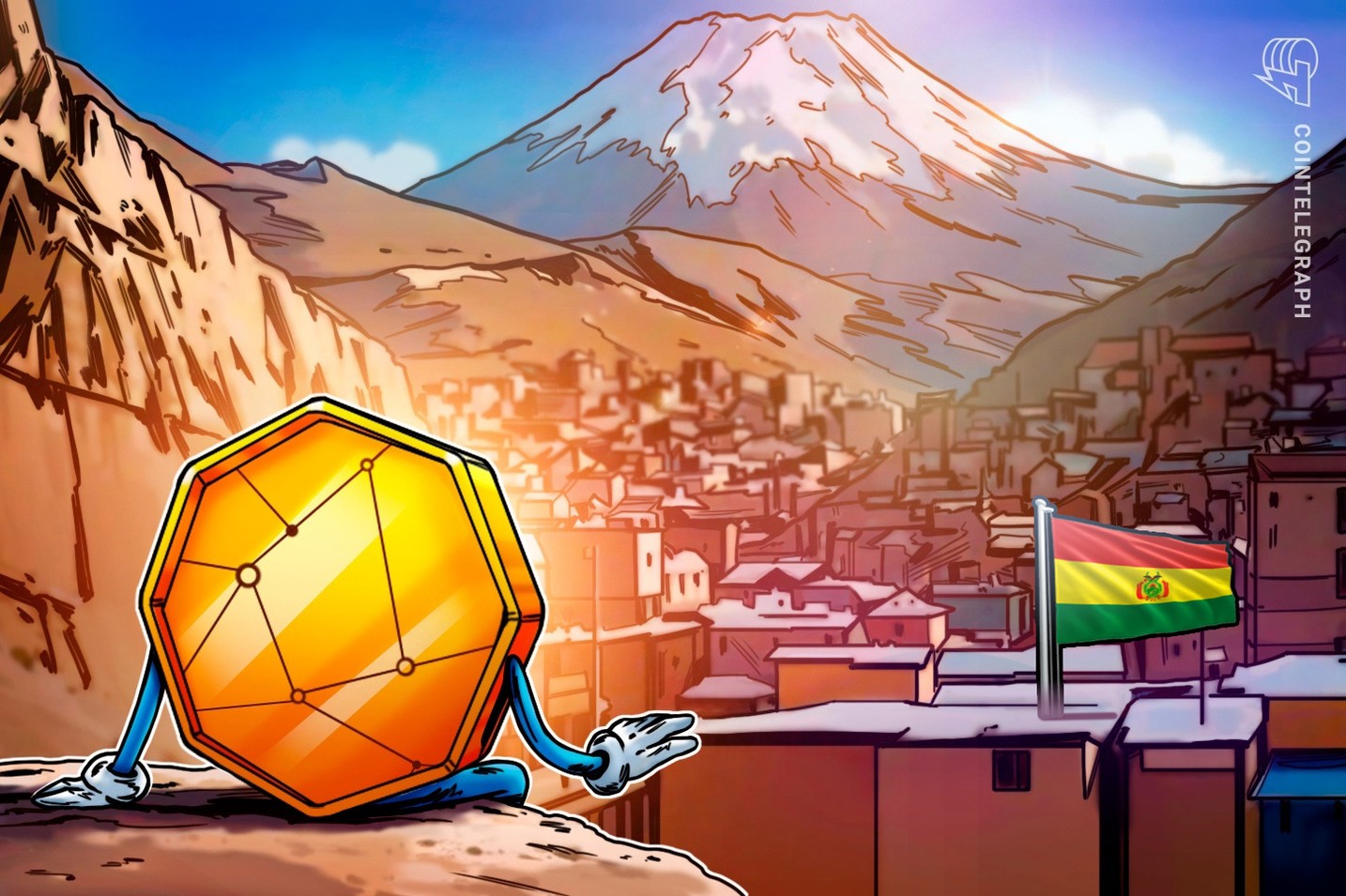
Fiat currency inflation, US dollar shortages, and global competition are prompting the government to integrate cryptocurrencies.
News
The government of Bolivia will integrate cryptocurrencies and stablecoins into the financial system in a push to modernize the country’s economy, Bolivia’s economic minister, Jose Gabriel Espinoza, announced on Tuesday.
Banks will be allowed to custody crypto on behalf of clients, enabling digital currencies to function as a legal tender for savings accounts, credit products, and loans, according to .
“You can’t control crypto globally, so you have to recognize it and use it to your advantage,” Espinoza said.

Bolivia, like other countries in Latin America, , prompting some residents to turn to stablecoins as a store of value and a medium of exchange.
The rush by nation-states to integrate cryptocurrencies into the financial system reflects the high-stakes game theory cited by analysts, who that a fear of missing out (FOMO) is the primary force .
Related:
The average inflation rate of the country’s fiat currency, the boliviano, averaged above 22% in the 12 months to October, to Bolivia’s National Institute of Statistics.

Businesses in the country have started to (), a dollar-pegged stablecoin, as an alternative to pricing in the local currency.
YPFB, Bolivia’s state-owned energy company, announced in March that it is building a framework to , although no concrete provisions have been laid out, including which cryptocurrencies will be used for cross-border energy transactions.
In September, vehicle manufacturers, including Toyota, Yamaha, and BYD Company, started in Bolivia as a solution for US dollar shortages.
US dollars are crucial for international business and as a reserve asset for central banks that manage monetary exchange-rate regimes linked to the dollar.
Stablecoins help fill this demand while overcoming local currency controls by enabling anyone with a cellphone and a crypto wallet to purchase and hold dollar-pegged tokens, bypassing centralized infrastructure, such as traditional banks that enforce strict controls.
High inflation and strict currency controls have only bolstered in Latin America and other emerging economies beset by high inflation.
Magazine:
![[Action required] Your RSS.app Trial has Expired.](https://8v.com/info/wp-content/uploads/2026/01/rss-app-cfAqZL-350x250.png)