



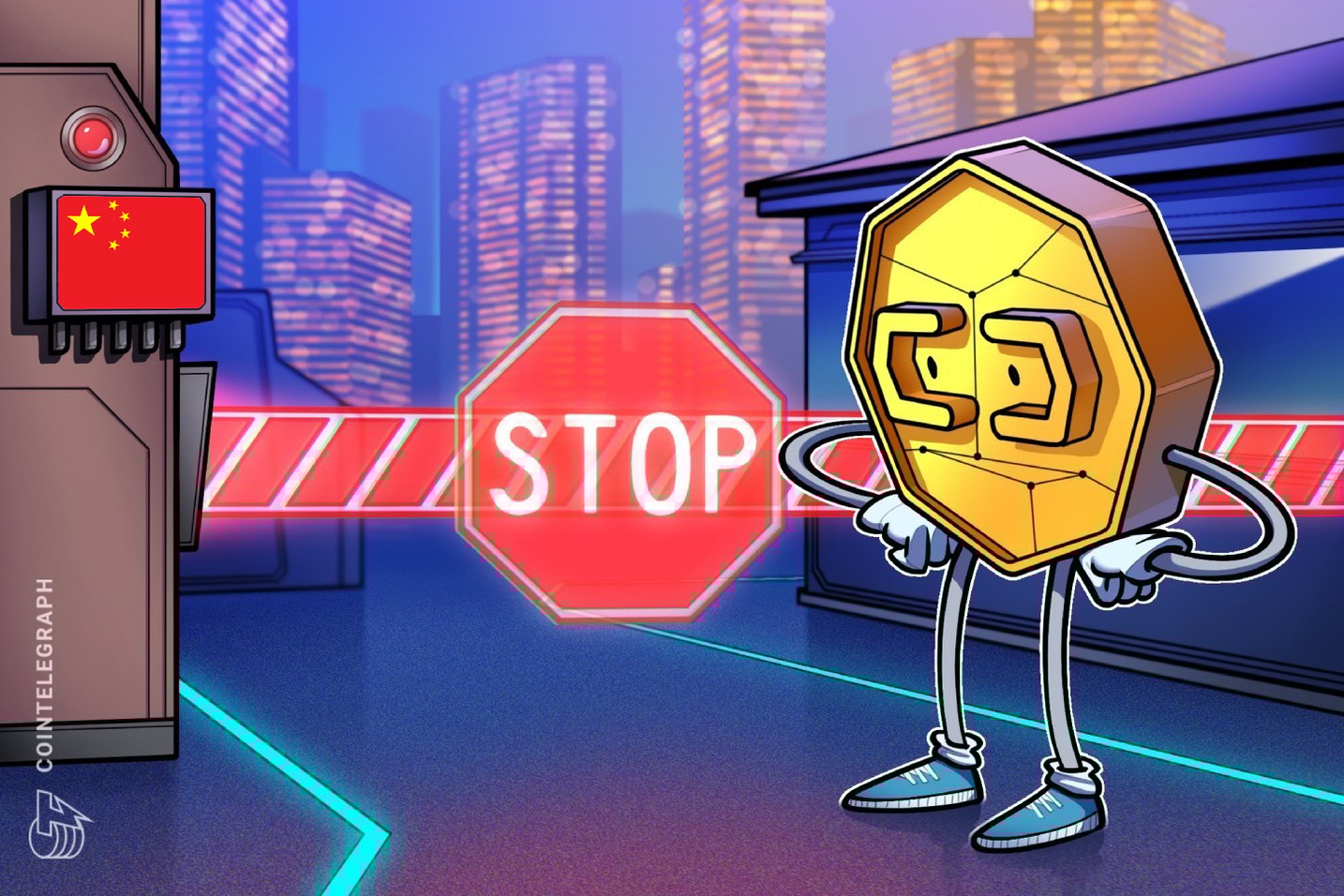
The People’s Bank of China reasserted the country’s crypto ban, claiming trading had reemerged and vowed to crack down on stablecoins.
News
China’s central bank has flagged stablecoins as a risk and has promised to refresh its crackdown on crypto trading, which it has banned since 2021.
The People’s Bank of China on Saturday, after a meeting with 12 other agencies, that “virtual currency speculation has resurfaced” due to various factors, posing new challenges for risk control.
“Virtual currencies do not have the same legal status as fiat currencies, lack legal tender status, and should not and cannot be used as currency in the market,” the bank said, according to a translation of its statement.
“Virtual currency-related business activities constitute illegal financial activities.”
China’s central bank trading and mining in 2021, citing a need to curb crime and claiming that crypto posed a risk to the financial system.
China’s central bank highlighted stablecoins as a particular concern, stating that the tokens weren’t meeting legal requirements and were being used in criminal activities.
“Stablecoins are a form of virtual currency, and currently cannot effectively meet requirements for customer identification and Anti-Money Laundering, posing a risk of being used for illegal activities such as money laundering, fundraising fraud, and illegal cross-border fund transfers,” the bank said.

The bank said it would “persistently crack down on illegal financial activities” related to crypto to “maintain the stability of the economic and financial order.”
Related:
The 13 agencies that attended the meeting stated that they would “deepen coordination and cooperation” in tracking down crypto users by strengthening information sharing and enhancing monitoring capabilities.
Reuters on Wednesday that China had the third-highest share of Bitcoin () , with its market share reaching 14% by the end of October.
In August, China’s financial regulators reportedly instructed brokers and halt the promotion of research on stablecoins, citing concerns that they could be exploited as a tool for fraudulent activities.
Meanwhile, Hong Kong opened the doors to licensing stablecoin issuers in July, but some tech companies suspended plans to launch stablecoins in the region after Chinese regulators to pause the offerings.
Magazine:
![[Action required] Your RSS.app Trial has Expired.](https://8v.com/info/wp-content/uploads/2026/01/rss-app-cfAqZL-350x250.png)