![[Action required] Your RSS.app Trial has Expired.](https://8v.com/info/wp-content/uploads/2026/01/rss-app-cfAqZL-75x75.png)






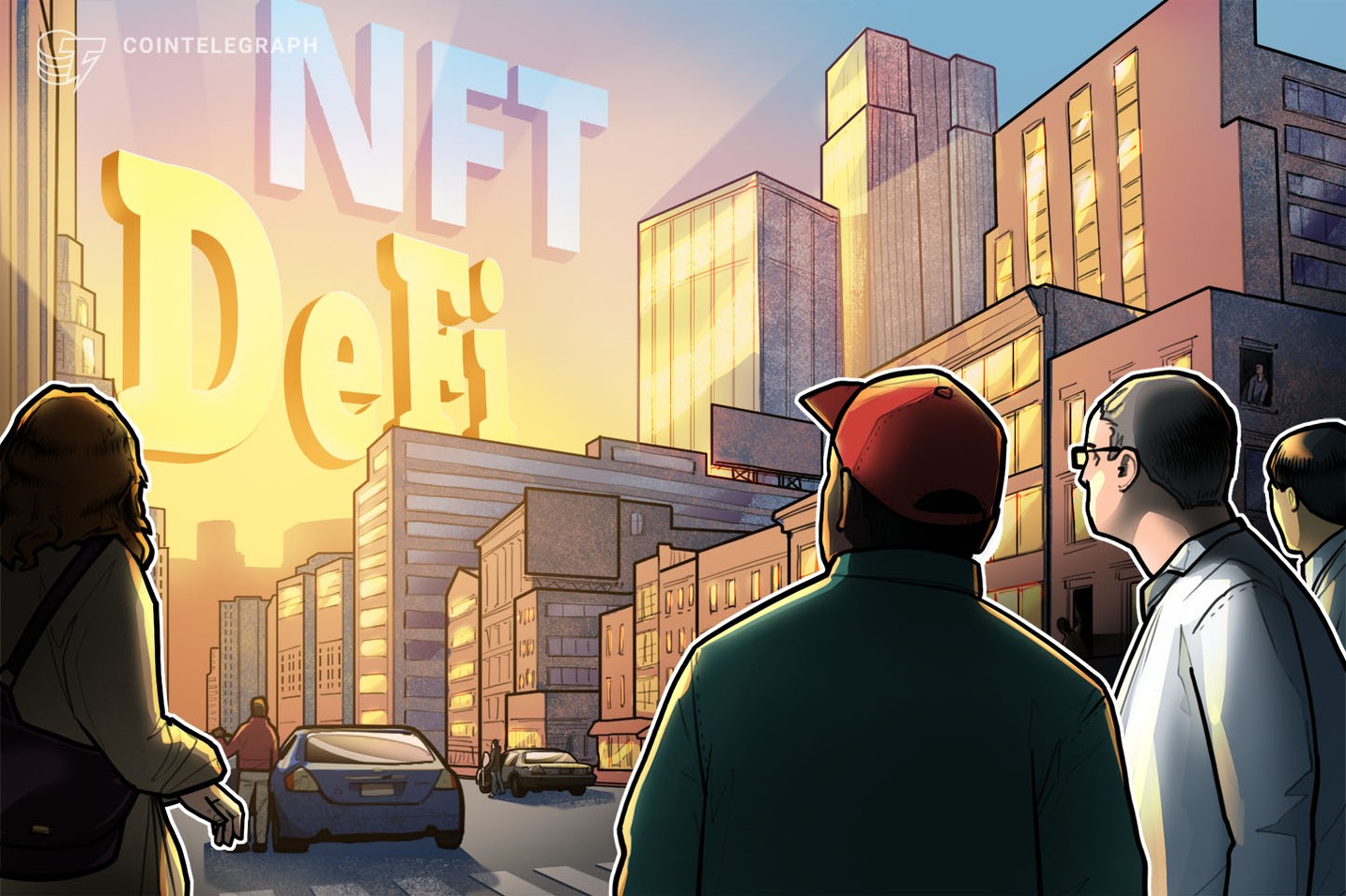
NFT DApps drew slightly more active users than DeFi in July, even as DeFi liquidity hit a record $270B.
News
Locked liquidity on decentralized finance (DeFi) applications reached a record $270 billion in July, partly driven by tokenized stocks growth.
DappRadar’s data the total value locked (TVL) in DeFi protocols jumped 30% month-over-month, while active wallets for tokenized stocks soared from roughly 1,600 to more than 90,000, pushing their market cap up 220%.
Meanwhile, NFT trading volumes jumped 96% to $530 million during the month. The average NFT price also doubled to around $105 as more users engaged with the market.
Related:
NFT activity edges ahead of DeFi
While DeFi liquidity climbed, user attention shifted elsewhere. In July, approximately 3.85 million of the 22 million daily active wallets interacted with NFT DApps — slightly more than were active in DeFi.
Ethereum-based marketplace Blur drove much of the activity, capturing up to 80% of daily NFT volume, while OpenSea topped active users at roughly 27,000 traders. Zora also gained momentum with its creator-first layer 2 and $ZORA token for low-cost minting.
Major brands continued experimenting with NFTs. Nike.SWOOSH partnered with EA Sports for virtual sneaker drops, and Louis Vuitton, Rolex and Coca-Cola (China) launched authentication and collectible pilots.
NFT trading volume also rose about 36% in July to $530 million, up from $389 million in June, though it’s still down from its 2025 high of $997 million in January.

As reported by Cointelegraph, there has been a resurgence in interest in like CryptoPunks. Data from NFT Floor Price shows the Ethereum-based collection is up over 25% the past month.
During the past 24 hours, nine of the top 10 NFT sales were : The lone non-Punk sale being an NFT from the Web3 artist Beeble.
Related:
NFT market is still far from its 2021 boom
Despite July’s rebound, NFTs are still underwhelming compared to past peaks. DappRadar’s 2024 industry shows that NFT trading volume dropped 19% year‑over‑year, and sales counts declined 18%, making 2024 one of the weakest years since 2020.
CryptoSlam data for H1 2025 further underscores the slow recovery: , down 4.6% from the second half of 2024.
While there was a notable resurgence in July, with trading volume and floor prices rising, the market still well below its 2021 highs, when trading volumes ran into the tens of .
![[Action required] Your RSS.app Trial has Expired.](https://8v.com/info/wp-content/uploads/2026/01/rss-app-cfAqZL-350x250.png)