



Deutsche Börse is integrating AllUnity’s EURAU stablecoin into its market infrastructure — its third euro-pegged stablecoin — signaling a full-spectrum push.
News
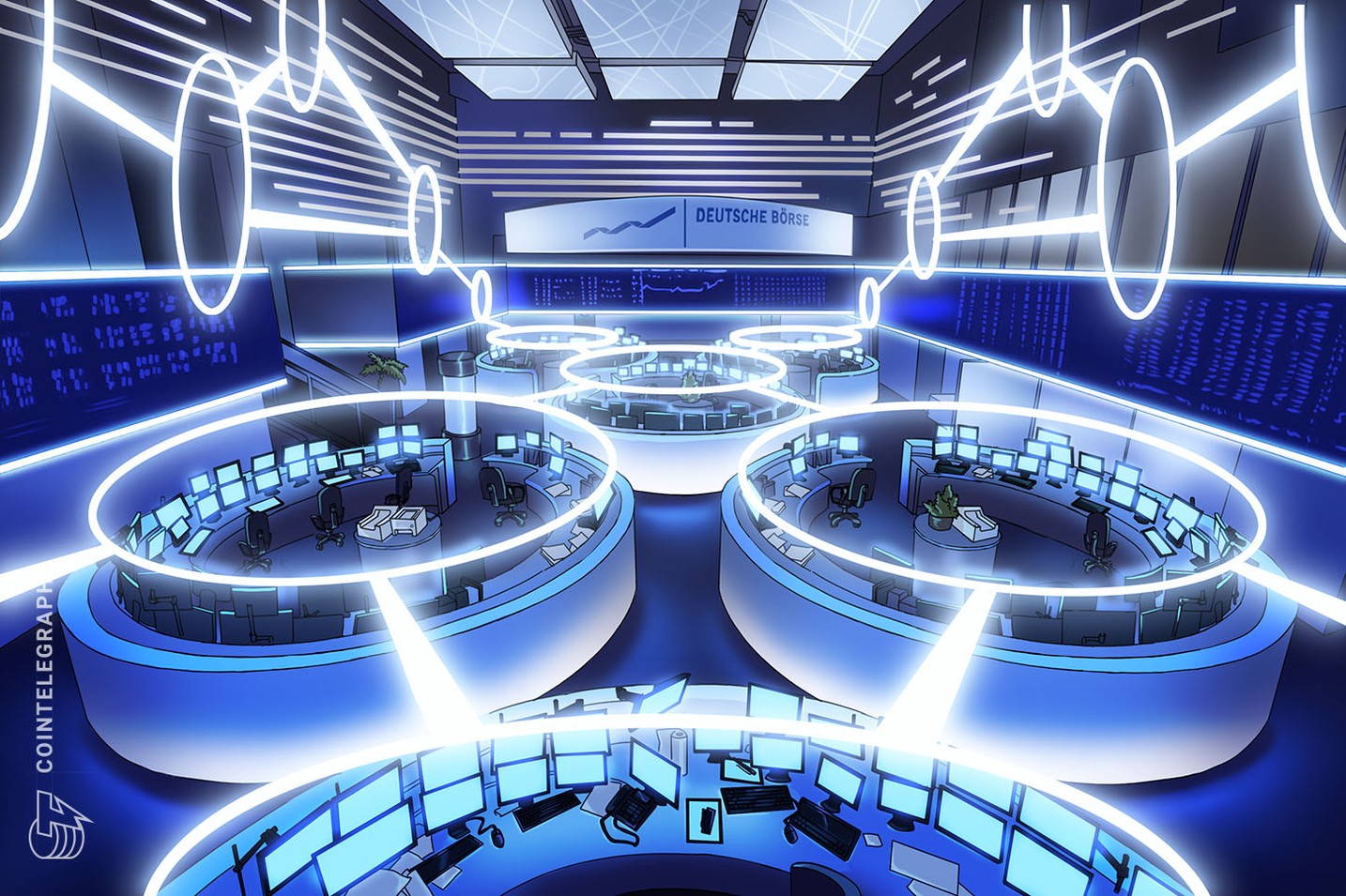
Market infrastructure provider Deutsche Börse plans to integrate the EURAU euro-pegged stablecoin issued by AllUnity, expanding the exchange group’s digital-asset strategy following earlier work with Circle’s Euro Coin (EURC) and Societe Generale-Forge’s EUR CoinVertible (EURCV).
According to a Nov. 26 announcement shared with Cointelegraph, Deutsche Börse plans to integrate EURAU into its financial market infrastructure, starting with institutional custody through its central securities depository arm, Clearstream. The announcement also promises a future “integration of the euro stablecoin across the entire service portfolio.”
This would integrate the into a sizable and growing market. According to World Federation of Exchanges , Deutsche Börse’s domestic equity market capitalization is about $2.23 trillion with 474 listed companies.
The two companies signed a memorandum of understanding, but have not yet shared a specific date for when the new features will go live. AllUnity CEO Alexander Höptner said that the partnership is “making onchain cross-border payments and digital assets accessible to institutional market participants.”
Deutsche Börse Group executive board member Stephanie Eckermann said the “goal is to build a seamless bridge between the established financial world and the future of digital assets.” She added that this partnership is an important part of this effort and that embedding institutional-grade stablecoins allows clients “to confidently explore new possibilities in digital finance.”

Deutsche Börse and AllUnity had not responded to Cointelegraph’s inquiry by publication.
Related:
Deutsche Börse expands euro stablecoin strategy
Deutsche Börse’s EURAU integration follows its partnership with major stablecoin issuer Circle to . Earlier this month, the company also that it had partnered with Societe Generale-Forge to integrate its EURCV stablecoin.
With this latest deal, Deutsche Börse appears to be playing the stablecoin game on all fronts, having added EURAU, an offering issued by a German BaFin-licensed e-money institution. This adds to EURCV, a is the blockchain arm of major French multinational bank Societe Generale and EURC coming from a US tech-sector issuer.
Related:
EU stablecoin adoption is taking shape with MiCA
While not leading to as many headlines as the United States, the European Union is also making progress in stablecoin adoption following the full introduction of the at the end of 2024. The announcement notes that the partnership “aligns with MiCA” and “represents a tangible step toward digitizing European markets and enhancing settlement and liquidity processes.”
“Europe is taking a global lead in regulated digital finance,” Höptner said.
Still, while picking up speed, stablecoin adoption is still low in Europe. Earlier this month, Financial stability experts at the European Central Bank (ECB) said stablecoin-related risks in the euro area are .
Some analyses point to that US dollar-backed stablecoins could threaten the European Union’s monetary independence. “Europe should not be dependent on US dollar-denominated stablecoins, which are currently dominating markets,” Pierre Gramegna, the managing director of the European Stability Mechanism, .
The industry is also seeing increasing involvement by local traditional financial players. In mid-October, Franco-German banking group ODDO BHF under the MiCA framework.
In late September, a group of major European banks joined forces to under MiCA. The list of nine banks includes Dutch lender ING and Italy’s UniCredit.
Magazine:
![[Action required] Your RSS.app Trial has Expired.](https://8v.com/info/wp-content/uploads/2026/01/rss-app-cfAqZL-350x250.png)