



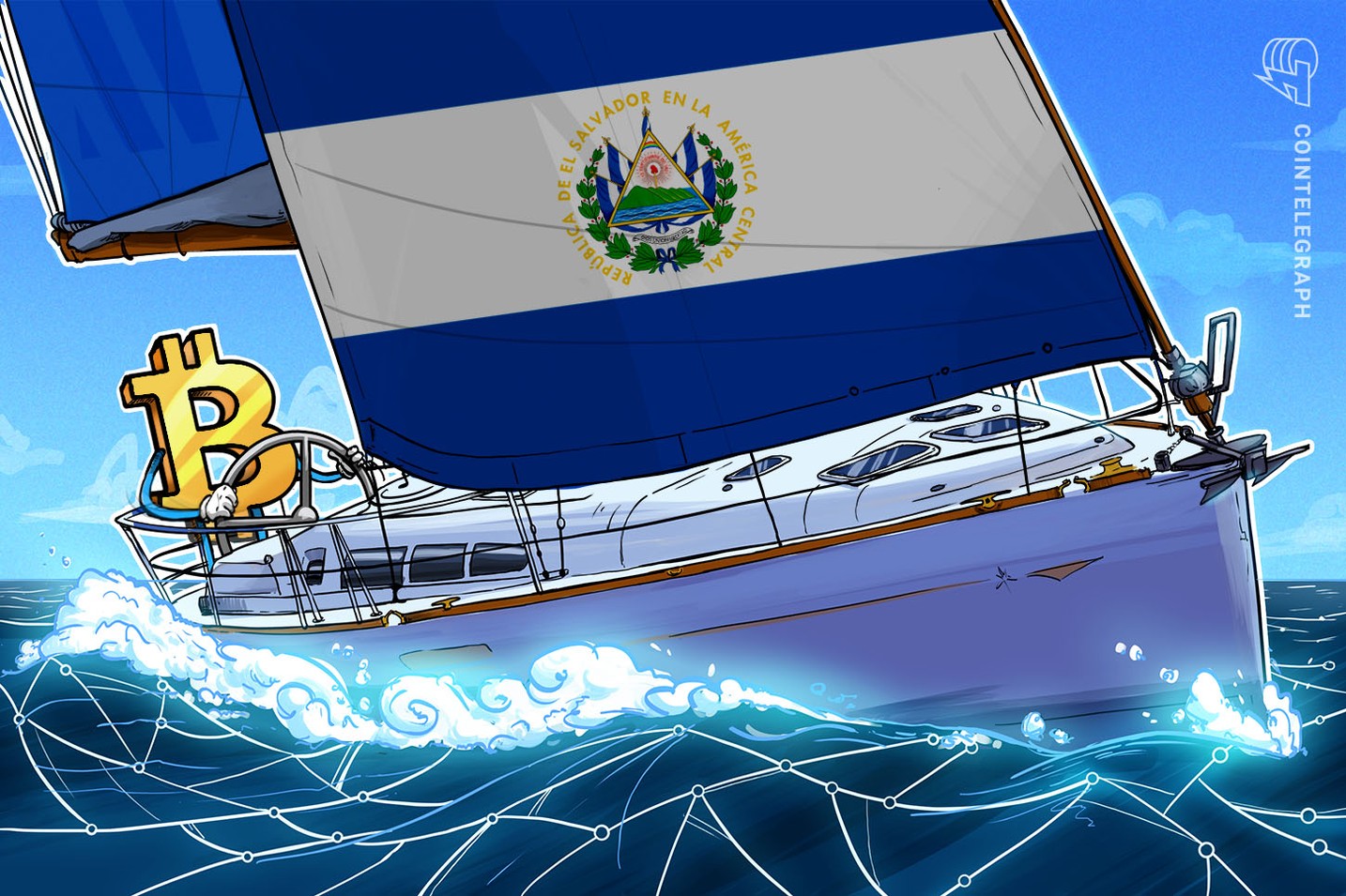
El Salvador was the first country to make Bitcoin legal tender, but it has since scaled back its Bitcoin laws and public sector involvement.
News
El Salvador’s Bitcoin Office is celebrating “Bitcoin Day,” the anniversary of the Bitcoin () legal tender law taking effect in September 2021.
The Bitcoin Office highlighted the country’s Bitcoin strategic reserve, which now holds 6,313 BTC, valued at over $702 million, and the new banking law, which allows , in a Sunday X .
The government BTC agency also said 80,000 public servants have received a Bitcoin certification as of 2025, and added that El Salvador now hosts several public Bitcoin and artificial intelligence education programs.

Despite El Salvador being the first country in the world to adopt Bitcoin as legal tender and establish a strategic reserve, the government to comply with a loan deal from the International Monetary Fund (IMF), a supranational financial institution.
The country’s four-year-long Bitcoin experiment has yielded mixed results, leaving the Bitcoin community of the first example of nation-state-level Bitcoin adoption.
Related:
El Salvador’s legislature and agreed not to purchase additional Bitcoin using public funds as part of a $1.4 billion loan deal with the IMF in January.
The government also agreed to pare back support for its Chivo Bitcoin wallet, which saw limited use among residents of the country.
The IMF published a in July revealing that El Salvador has since signing the $1.4 billion loan agreement in December 2024, sending through the crypto community.
Included in the IMF report was a letter of intent signed by El Salvador’s central bank president, Douglas Pablo Rodríguez Fuentes, and minister of finance, Jerson Rogelio Posada Molina, confirming that the government’s BTC balance has not changed.

El Salvador’s policies have drawn criticism from some Bitcoin advocates and non-government organizations (NGOs), who say the BTC policies of the Central American country.
Critics say that more education initiatives are needed to fully realize the benefits of the world’s first decentralized peer-to-peer electronic cash system and to foster adoption by the local population, rather than government agencies and international corporations.
Magazine:
![[Action required] Your RSS.app Trial has Expired.](https://8v.com/info/wp-content/uploads/2026/01/rss-app-cfAqZL-350x250.png)