



Brevis has launched ProverNet, a ZK-proof marketplace where provers can earn by computing proofs and apps can buy proving capacity.

News
Zero-knowledge proof (ZK-proof) coprocessor Brevis launched its marketplace, allowing users to earn by computing ZK-proofs.
According to a Monday Brevis , the “ProverNet” network allows applications to access proving capacity and computing providers to earn money by computing proofs. Currently, the network uses Circle’s USDC () stablecoin as the native settlement currency.
Still, Brevis plans to move to the yet-to-be-launched BREV token when ProverNet comes out of beta and launches mainnet. On mainnet, the system will also prover staking and slashing for “misbehavior or missed deadlines.”
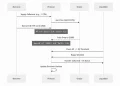
Currently, ProverNet allows for proving task distribution through a continuous auction, USDC payment settlement and prover registration and job matching. Provers can already register and start competing for jobs, while applications can also submit proof requests directly to the network.

Related:
Not new to the game
Computing ZK-proofs is computationally intensive, meaning it is often impractical for developers or users to compute them themselves. This is especially true when large volumes of proofs are needed, as seen in some projects.
Brevis has long offered ZK-proof processing as a solution for the industry. The firm announced in late 2023 that it Uniswap v4 hooks to trustlessly read and compute the transaction history of liquidity providers and traders.
In October, Uniswap, a decentralized crypto exchange, introduced a routing rebate program built on its technology, that Brevis had been awarded a grant to develop it. Earlier this year, Brevis had also “a partnership between MetaMask, Linea, and Brevis to bring ZK Proof-powered rewards to MetaMask Card users.”
PancakeSwap also Brevis infrastructure for ZK-proof processing. After a 2024 Binance , it was also to power trustless crosschain restaking infrastructure on BNB Chain.
Brevis claims to have processed over 250 million proofs across more than 30 partners. The organization explained that it learned that ZK-proof workloads are highly variable, which led to the development of ProverNet to provide enough flexibility:
“From this point on, applications get access to specialized capacity without vendor lock-in while provers can now find workloads matched to their hardware. The ecosystem gets shared infrastructure instead of fragmented silos,” it said.
Related:
A DePIN with usage from day one
In its announcement, Brevis also notes that it is already “gradually migrating” production workloads to ProverNet. For now, the service is moving “a subset of Ethereum block execution proving from ETHProofs.”
ETHPoofs is a public-facing service for generating ZK-proofs of Ethereum block execution — proving what is included in specific blocks. This allows crosschain verification for trust-minimized bridging, among other applications.
Magazine:
![[Action required] Your RSS.app Trial has Expired.](https://8v.com/info/wp-content/uploads/2026/01/rss-app-cfAqZL-350x250.png)