• Latest
  • All
  • Breaking
  • Announcements
  • Learn
  • Analysis
  • Current events
Risk, Reward, and Resilience: Building Insurance Primitives in DeFi

Risk, Reward, and Resilience: Building Insurance Primitives in DeFi

July 9, 2025

Announcement on Removal of Spot Trading Pairs APT/USDT, TNSR/USDT, W/USDT, etc.

March 3, 2026

Announcement on Wallet Maintenance and Upgrade

February 28, 2026

Celebrate the New Year with 8V New Year Earn!

February 13, 2026

Announcement on TRON (TRX) Network Upgrade

February 10, 2026

Partial Futures Features Maintenance

February 2, 2026

Announcement on Delisting of VET (VeChain)

January 29, 2026

Announcement on Delisting of VTHO (VeThor Token)

January 29, 2026

Announcement on the Removal of the QTUM/USDT Trading Pair

January 26, 2026

Announcement on TRON (TRX) network upgrade

January 23, 2026
[Action required] Your RSS.app Trial has Expired.

[Action required] Your RSS.app Trial has Expired.

January 19, 2026
Binance Australia Restores Direct Bank and PayID Transfers for User

Binance Australia Restores Direct Bank and PayID Transfers for User

January 19, 2026
Trove Investors Seek Refunds After Perps Pivot to Solana

Trove Investors Seek Refunds After Perps Pivot to Solana

January 19, 2026
Thursday, March 5, 2026
8V Crypto Academy
8V Academy - 8V.com - Your Cryptocurrency Gateway
  • About 8V
    • 8V Exchange
    • 8V Blog
  • Market Beat
    • Today Real-time Market Data
    • Web3
    • Breaking
    • Tokens
    • Markets
    • Compliance
    • Exchanges
    • Tech
    • GameFi
    • NFT
    • Defi
    • Miscellaneous
  • Platform
    • 8V Announcements
    • Events
      • Current Events
      • Closed Events
    • Product
      • 8V Overview
      • Assets
      • Exchange
        • Spot Trading
        • Futures Trading
        • Leverage Trading
      • Copy Trading
      • Earn
        • Fixed
        • Flexible
      • Cryptocurrency Debit Card
      • Buy Crypto Instantly
      • Strategy Trading
    • Trading Fees and Limits
    • 8V Exchange API
    • Referral Scheme
    • Bug Bounty
    • FAQ
      • 8V Cryptocurrency Card
      • Account Functions
      • Deposits & Withdrawals
      • Contract Related
      • 8V LaunchX Protocol
      • Others
  • Academy
    • How To Buy Crypto
    • Learning Center
    • Analysis Center
    • Crypto Glossary
  • Business
    • Coin Listing Request
    • Crypto Trader Application
    • Partnerships
  • Policy
    • Privacy Policy
    • Service Agreement
    • Disclaimer
    • Compliance Notice
  • English
    • English
    • 中文 (台灣)
    • 中文 (中国)
  • Login
  • Register
No Result
View All Result
  • About 8V
    • 8V Exchange
    • 8V Blog
  • Market Beat
    • Today Real-time Market Data
    • Web3
    • Breaking
    • Tokens
    • Markets
    • Compliance
    • Exchanges
    • Tech
    • GameFi
    • NFT
    • Defi
    • Miscellaneous
  • Platform
    • 8V Announcements
    • Events
      • Current Events
      • Closed Events
    • Product
      • 8V Overview
      • Assets
      • Exchange
        • Spot Trading
        • Futures Trading
        • Leverage Trading
      • Copy Trading
      • Earn
        • Fixed
        • Flexible
      • Cryptocurrency Debit Card
      • Buy Crypto Instantly
      • Strategy Trading
    • Trading Fees and Limits
    • 8V Exchange API
    • Referral Scheme
    • Bug Bounty
    • FAQ
      • 8V Cryptocurrency Card
      • Account Functions
      • Deposits & Withdrawals
      • Contract Related
      • 8V LaunchX Protocol
      • Others
  • Academy
    • How To Buy Crypto
    • Learning Center
    • Analysis Center
    • Crypto Glossary
  • Business
    • Coin Listing Request
    • Crypto Trader Application
    • Partnerships
  • Policy
    • Privacy Policy
    • Service Agreement
    • Disclaimer
    • Compliance Notice
  • English
    • English
    • 中文 (台灣)
    • 中文 (中国)
  • Login
  • Register
No Result
View All Result
8V Crypto Academy
No Result
View All Result

8V Crypto Academy » Risk, Reward, and Resilience: Building Insurance Primitives in DeFi

Risk, Reward, and Resilience: Building Insurance Primitives in DeFi

July 9, 2025
in Breaking, News
Reading Time: 5 mins read
A A

Insurance stands as one of finance’s foundational primitives—an essential scaffold that undergirds every major market from commodities to credit. Since the 1600s, no vibrant financial ecosystem has thrived without a robust insurance mechanism: market participants demand quantifiable measures of risk before committing capital.

Yet in decentralized finance(DeFi)’s first wave—lending, exchanges, derivatives—insurance remained an afterthought, implemented in rudimentary forms or absent altogether. As DeFi targets its next inflection point, embedding sophisticated, institution-grade insurance models will be critical to unlocking deep pools of capital and delivering enduring resilience.

jwp-player-placeholder

STORY CONTINUES BELOW

Don’t miss another story.Subscribe to the The Node Newsletter today.By signing up, you will receive emails about CoinDesk products and you agree to ourand.

Modern insurance has a long history. In the 16th century, Gerolamo Cardano’s early treatises on games of chance pioneered probabilistic thinking, framing uncertainty in mathematical terms (eventually he would give his name to today’s blockchain).

In the mid-17th century, an epochal correspondence between Blaise Pascal and Pierre de Fermat laid the empirical bedrock for probability theory, transforming chance from mysticism into a quantifiable science.

By the 19th century, Carl Friedrich Gauss’s formalization of the normal distribution enabled statisticians to model deviations around an expected value systematically—a breakthrough instrumental to actuarial science.

At the dawn of the 20th century, Louis Bachelier’s seminal work on the random walk of asset prices presaged modern quantitative finance, informing everything from option pricing to risk management.

Later in that century, Harry Markowitz’s portfolio theory reframed diversification as a quantitative process, offering a rigorous framework for balancing risk and return.

The Black-Scholes-Merton model further advanced the field by providing a tractable means to derive implied volatilities and price options—cornerstones of modern derivatives markets.

In recent decades, innovators like Paul Embrechts and Philippe Artzner enriched risk theory with copula statistical models and coherent risk measures, enabling the systematic capture of extreme tail risks and systemic dependencies.

Insurance requires four core prerequisites: diversified risk vectors, a risk premium exceeding capital costs, scalable pools of capital, and quantifiable exposures. DeFi clearly offers quantifiable hazards—protocol exploits, oracle manipulations, governance attacks—but challenges to insurability remain.

Early DeFi insurance initiatives struggled with limited actuarial sophistication, untested capital structures, and prohibitive premiums driven by the high opportunity cost of capital.

Moreover, DeFi’s rapid innovation cycle creates a shifting threat landscape: vulnerabilities in one protocol seldom translate neatly to another, and the speed of code changes outpaces traditional underwriters’ capacity to assess risk.

Overcoming these obstacles will require next-generation insurance architectures that can adapt dynamically to evolving hazard profiles. High Price Insurance Capital

At the heart of any insurance construct lies the cost of capital. DeFi insurance pools typically accept ETH, BTC, or stablecoins—assets that themselves generate on-chain yield via staking, lending, or liquidity provisions. Insurers must therefore offer returns above these native yields to attract underwriters, driving premiums upward. This results in a classic Catch-22: high premiums deter protocol teams, yet low capital costs undermine coverage capacity and solvent reserves.

To break this impasse, market architects must tap alternative capital sources. Institutional investors—pension funds, endowments, hedge funds—possess vast pools of capital with long-term horizons. By designing insurance products aligned to these investors’ risk-return benchmarks (e.g., structured tranches offering defined upside in exchange for taking first-loss positions), DeFi insurance constructs can achieve a sustainable cost of capital, balancing affordability with solvency.

Jakob Bernoulli’s underpins classical insurance: as policy counts grow, actual loss ratios converge toward expected values, enabling precise actuarial pricing. Mortality tables by Edmond Halley and Abraham de Moivre epitomize this principle, translating population statistics into dependable premiums.

DeFi’s nascent ecosystem, however, features only a finite—and often correlated—set of protocols. Catastrophic events such as multi-protocol oracle manipulations expose systemic dependencies that violate independence assumptions.

Instead of relying solely on volume, DeFi insurance must employ layered diversification: reinsurance agreements across independent risk pools, capital tranching to allocate losses by seniority, and parametric triggers that automate coverage payouts based on on-chain metrics (e.g., price slippage thresholds, oracle deviation tolerances). Such architectures can approximate the smoothing benefits achieved by traditional insurers.

RelatedPosts

[Action required] Your RSS.app Trial has Expired.

Binance Australia Restores Direct Bank and PayID Transfers for User

Trove Investors Seek Refunds After Perps Pivot to Solana

Nasdaq Tells Canaan to Boost Share Price or Face Delisting

Quantitative risk modeling in DeFi remains in its formative stages. With only a handful of years of historical data and immense heterogeneity across smart-contract platforms, extrapolating risk from one protocol to another carries significant uncertainty. Past exploits—on Venus, Bancor or Compound—yield forensic insights but limited predictive power for novel vulnerabilities in emerging protocols such as Aave v3 or Uniswap v4.

Building robust DeFi risk frameworks demands hybrid approaches: integrating on-chain analytics for real-time exposure tracking, formal security verification of smart-contract code, oracles for external event validation, and comprehensive stress-tests against simulated attack vectors.

Machine-learning models can augment these methods—clustering protocols by code patterns, transaction behaviors, or governance structures—yet must be guarded against overfitting sparse data. Collaborative risk consortia, where protocol teams and insurers share anonymized data on exploits and failure modes, could create a richer data foundation for next-generation models.

At its current scale, DeFi beckons for a reliable insurance primitive. Embedding sophisticated, scalable insurance solutions will not only shield capital but also translate abstract hazards—flash loan attacks, governance exploits, oracle failures—into measurable financial exposures. By aligning product design with institutional risk appetites, leveraging layered diversification, and advancing quantitative risk models, a vibrant DeFi insurance market could unlock previously inaccessible capital pools.

Such an ecosystem promises deeper liquidity, enhanced counterparty confidence, and broader participation—from family offices to sovereign wealth funds—transforming DeFi from an experimental frontier into a cornerstone of global finance.


Previous Post

Hedera’s HBAR Rises After Inclusion in Grayscale Fund

Next Post

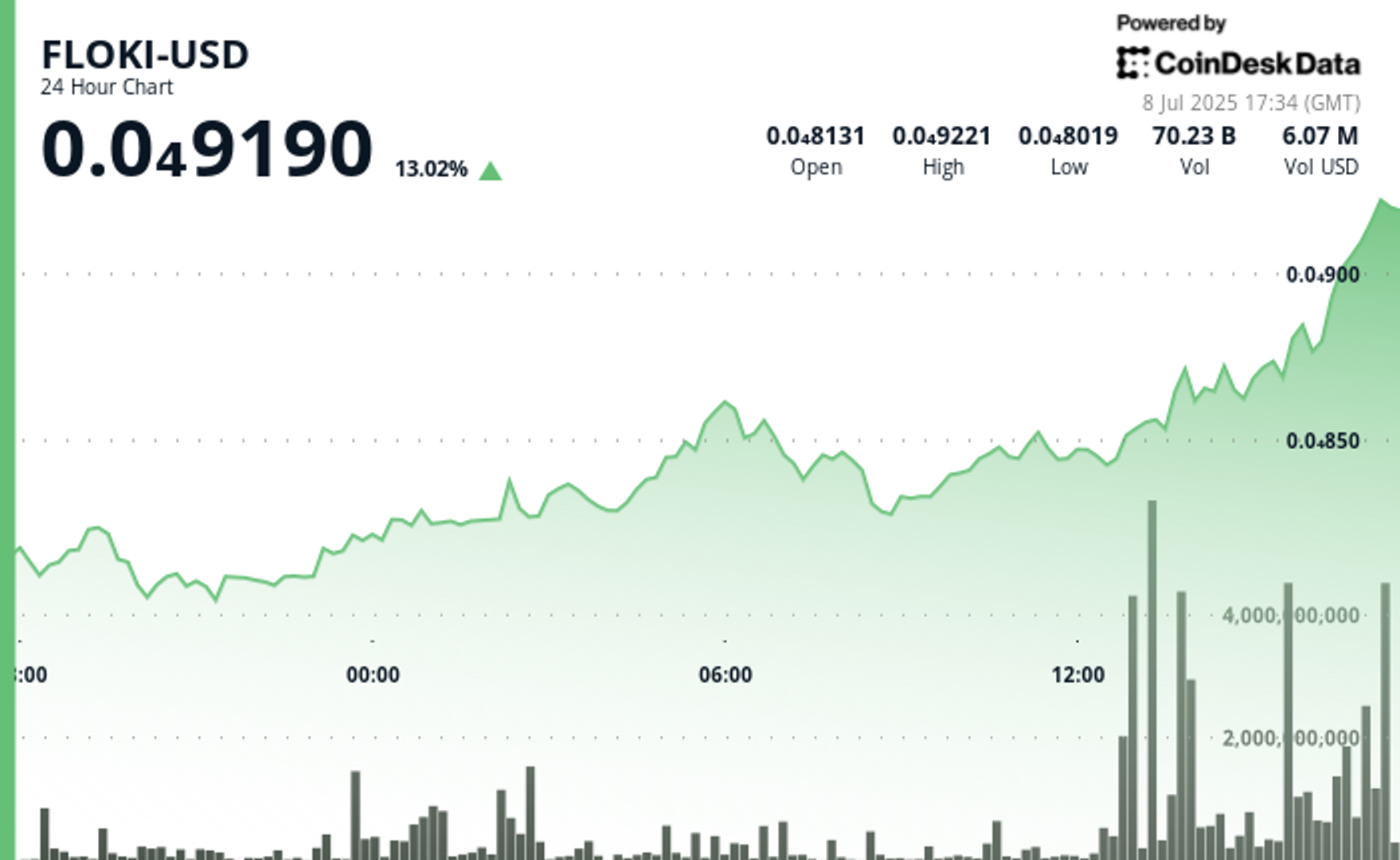
FLOKI Explodes 12% on Massive Volume, Potentially Signalling Bullish Momentum

Related Posts

[Action required] Your RSS.app Trial has Expired.
Breaking

[Action required] Your RSS.app Trial has Expired.

January 19, 2026
Binance Australia Restores Direct Bank and PayID Transfers for User
Breaking

Binance Australia Restores Direct Bank and PayID Transfers for User

January 19, 2026
Trove Investors Seek Refunds After Perps Pivot to Solana
Breaking

Trove Investors Seek Refunds After Perps Pivot to Solana

January 19, 2026
Nasdaq Tells Canaan to Boost Share Price or Face Delisting
Breaking

Nasdaq Tells Canaan to Boost Share Price or Face Delisting

January 19, 2026
Saylor Hints Strategy May Buy Even More Bitcoin After $1.25 billion Splurge
Breaking

Saylor Hints Strategy May Buy Even More Bitcoin After $1.25 billion Splurge

January 19, 2026
Bitcoin Drops $3,500 As EU Threatens Trump Tariff Retaliation
Breaking

Bitcoin Drops $3,500 As EU Threatens Trump Tariff Retaliation

January 19, 2026
Next Post
FLOKI Explodes 12% on Massive Volume, Potentially Signalling Bullish Momentum

FLOKI Explodes 12% on Massive Volume, Potentially Signalling Bullish Momentum

No Result
View All Result
深入分析 穩定幣脫鉤 DeFi USDX事件
Analysis

In-depth analysis of the stablecoin depeg from DeFi and the USDX event

by 8V
November 10, 2025
0

Last week's stablecoin depegging once again shook the decentralized finance (DeFi) world, with USDX, a synthetic stablecoin issued by Stable...

Read moreDetails
$60 Million Mistake, $19 Billion Nightmare: How Oracle Broke the Crypto Market

$60 Million Mistake, $19 Billion Nightmare: How Oracle Broke the Crypto Market

October 21, 2025
8V深度分析Aave V3借贷机制、流动性和风险管理

8V in-depth analysis – the Aave V3 lending e-mode mechanism

September 30, 2025
Polymarket和8V交易所對加密貨幣產業的意義

The Significance of Polymarket and 8V Exchange

September 16, 2025
Q4 Crypto Investment Strategy - 8V Crypto Academy

Q4 Crypto Investment Strategy

August 19, 2025
8v.com - download APP 8v.com - download APP 8v.com - download APP
  • About 8V
  • Download APP
  • Announcements
  • Breaking News
  • RSS Feeds
  • FAQ
  • Service Agreement
  • Privacy Policy
  • Disclaimer

© 2025 8V.com - 8V Crypto Academy - Empower your crypto journey! 8V.com

No Result
View All Result
  • About 8V
    • 8V Exchange
    • 8V Blog
  • Market Beat
    • Today Real-time Market Data
    • Web3
    • Breaking
    • Tokens
    • Markets
    • Compliance
    • Exchanges
    • Tech
    • GameFi
    • NFT
    • Defi
    • Miscellaneous
  • Platform
    • 8V Announcements
    • Events
      • Current Events
      • Closed Events
    • Product
      • 8V Overview
      • Assets
      • Exchange
      • Copy Trading
      • Earn
      • Cryptocurrency Debit Card
      • Buy Crypto Instantly
      • Strategy Trading
    • Trading Fees and Limits
    • 8V Exchange API
    • Referral Scheme
    • Bug Bounty
    • FAQ
      • 8V Cryptocurrency Card
      • Account Functions
      • Deposits & Withdrawals
      • Contract Related
      • 8V LaunchX Protocol
      • Others
  • Academy
    • How To Buy Crypto
    • Learning Center
    • Analysis Center
    • Crypto Glossary
  • Business
    • Coin Listing Request
    • Crypto Trader Application
    • Partnerships
  • Policy
    • Privacy Policy
    • Service Agreement
    • Disclaimer
    • Compliance Notice
  • English
    • English
    • 中文 (台灣)
    • 中文 (中国)
  • Login
  • Register

© 2025 8V.com - 8V Crypto Academy - Empower your crypto journey! 8V.com