• Latest
  • All
  • Breaking
  • Announcements
  • Learn
  • Analysis
  • Current events
Stablecoin Legislation Must Ensure Financial Privacy

Stablecoin Legislation Must Ensure Financial Privacy

April 24, 2025

Temporary Maintenance Notice for Deposit and Withdrawal System

March 13, 2026

Announcement on Removal of Spot Trading Pairs (OP/USDT, SLP/USDT, OG/USDT, etc.)

March 9, 2026

Announcement on Removal of Spot Trading Pairs APT/USDT, TNSR/USDT, W/USDT, etc.

March 3, 2026

Announcement on Wallet Maintenance and Upgrade

February 28, 2026

Celebrate the New Year with 8V New Year Earn!

February 13, 2026

Announcement on TRON (TRX) Network Upgrade

February 10, 2026

Partial Futures Features Maintenance

February 2, 2026

Announcement on Delisting of VET (VeChain)

January 29, 2026

Announcement on Delisting of VTHO (VeThor Token)

January 29, 2026

Announcement on the Removal of the QTUM/USDT Trading Pair

January 26, 2026

Announcement on TRON (TRX) network upgrade

January 23, 2026
[Action required] Your RSS.app Trial has Expired.

[Action required] Your RSS.app Trial has Expired.

January 19, 2026
Sunday, March 15, 2026
8V Crypto Academy
8V Academy - 8V.com - Your Cryptocurrency Gateway
  • About 8V
    • 8V Exchange
    • 8V Blog
  • Market Beat
    • Today Real-time Market Data
    • Web3
    • Breaking
    • Tokens
    • Markets
    • Compliance
    • Exchanges
    • Tech
    • GameFi
    • NFT
    • Defi
    • Miscellaneous
  • Platform
    • 8V Announcements
    • Events
      • Current Events
      • Closed Events
    • Product
      • 8V Overview
      • Assets
      • Exchange
        • Spot Trading
        • Futures Trading
        • Leverage Trading
      • Copy Trading
      • Earn
        • Fixed
        • Flexible
      • Cryptocurrency Debit Card
      • Buy Crypto Instantly
      • Strategy Trading
    • Trading Fees and Limits
    • 8V Exchange API
    • Referral Scheme
    • Bug Bounty
    • FAQ
      • 8V Cryptocurrency Card
      • Account Functions
      • Deposits & Withdrawals
      • Contract Related
      • 8V LaunchX Protocol
      • Others
  • Academy
    • How To Buy Crypto
    • Learning Center
    • Analysis Center
    • Crypto Glossary
  • Business
    • Coin Listing Request
    • Crypto Trader Application
    • Partnerships
  • Policy
    • Privacy Policy
    • Service Agreement
    • Disclaimer
    • Compliance Notice
  • English
    • English
    • 中文 (台灣)
    • 中文 (中国)
  • Login
  • Register
No Result
View All Result
  • About 8V
    • 8V Exchange
    • 8V Blog
  • Market Beat
    • Today Real-time Market Data
    • Web3
    • Breaking
    • Tokens
    • Markets
    • Compliance
    • Exchanges
    • Tech
    • GameFi
    • NFT
    • Defi
    • Miscellaneous
  • Platform
    • 8V Announcements
    • Events
      • Current Events
      • Closed Events
    • Product
      • 8V Overview
      • Assets
      • Exchange
        • Spot Trading
        • Futures Trading
        • Leverage Trading
      • Copy Trading
      • Earn
        • Fixed
        • Flexible
      • Cryptocurrency Debit Card
      • Buy Crypto Instantly
      • Strategy Trading
    • Trading Fees and Limits
    • 8V Exchange API
    • Referral Scheme
    • Bug Bounty
    • FAQ
      • 8V Cryptocurrency Card
      • Account Functions
      • Deposits & Withdrawals
      • Contract Related
      • 8V LaunchX Protocol
      • Others
  • Academy
    • How To Buy Crypto
    • Learning Center
    • Analysis Center
    • Crypto Glossary
  • Business
    • Coin Listing Request
    • Crypto Trader Application
    • Partnerships
  • Policy
    • Privacy Policy
    • Service Agreement
    • Disclaimer
    • Compliance Notice
  • English
    • English
    • 中文 (台灣)
    • 中文 (中国)
  • Login
  • Register
No Result
View All Result
8V Crypto Academy
No Result
View All Result

8V Crypto Academy » Stablecoin Legislation Must Ensure Financial Privacy

Stablecoin Legislation Must Ensure Financial Privacy

April 24, 2025
in Breaking, News
Reading Time: 5 mins read
A A

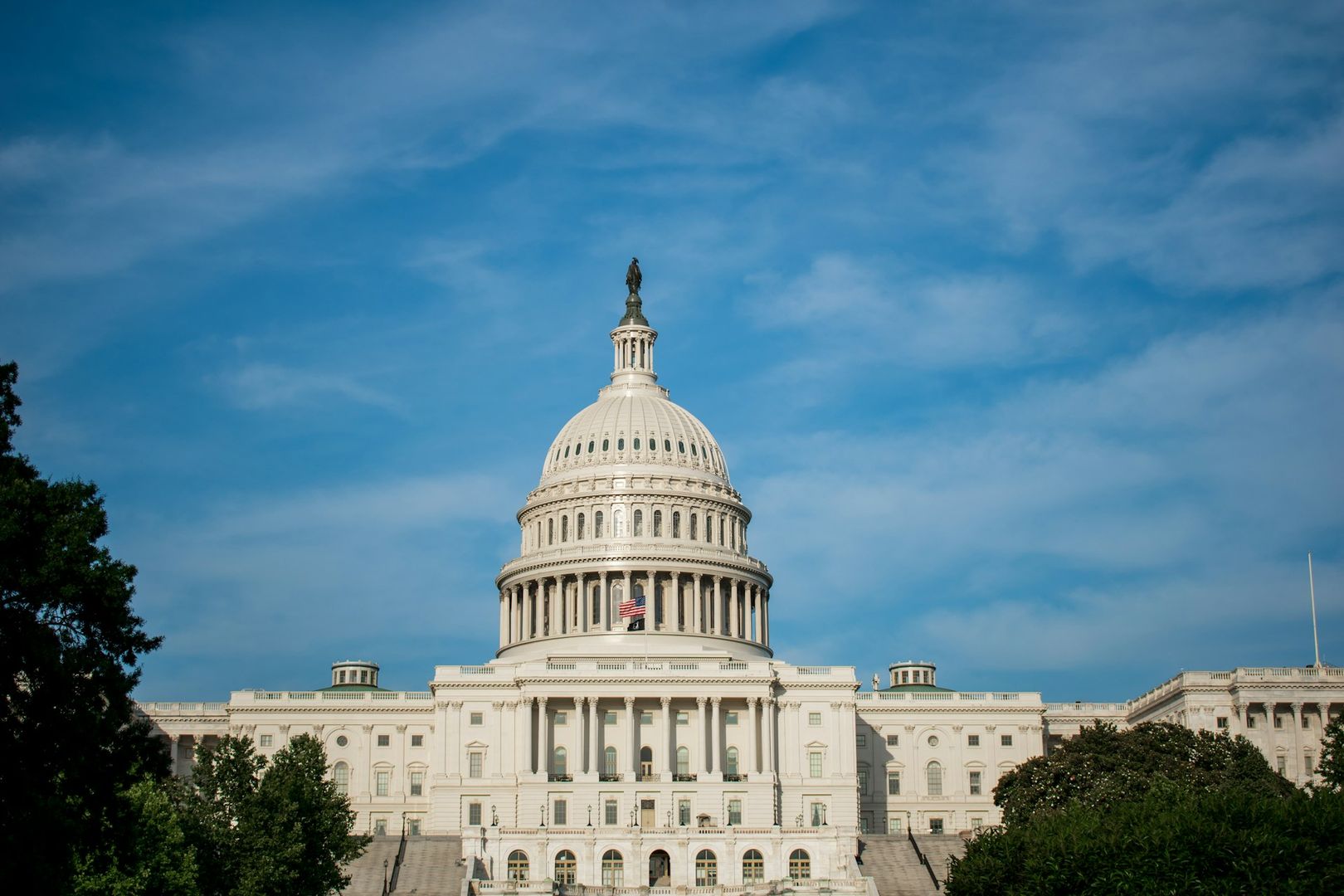
Both the U.S. Senate and House are considering bills creating a regulatory framework for stablecoins, and all of the usual crypto-skeptic refrains have been sung, including the hymn that crypto is for crime.

For instance, Senator Elizabeth Warren (D-MA) warned that the Senate’s GENIUS Act “will supercharge the financing of terrorism.” During debate on the House’s STABLE Act, Representative Brad Sherman (D-CA) worried about the use of “unhosted wallets to evade” anti-money laundering provisions.

STORY CONTINUES BELOW

Don’t miss another story.Subscribe to the The Node Newsletter today.See all newslettersBy signing up, you will receive emails about CoinDesk products and you agree to ourterms of useandprivacy policy.

Not surprisingly, both the GENIUS and STABLE Acts include significant sections on illicit finance, including subjecting stablecoin issuers to the Bank Secrecy Act (BSA). But lawmakers must ensure that the bills’ anti-money laundering measures don’t open the door to unfettered financial surveillance of stablecoin users.

Stablecoins are crypto tokens that are pegged to the value of another asset, like the U.S. dollar. The general idea is that the stable value of these tokens will promote their use as a digital medium of exchange. Stablecoins can be thought of both as an improvement to existing payment rails and as a way to bring the U.S. dollar “on-chain.” In other words, stablecoins are a 21st-century upgrade to cash. The Senate and the House have both advanced bills that would create a regulatory regime for “permitted stablecoin issuers” aimed, in part, at ensuring that stablecoins are, in fact, stable.

But these days, conversations about the dollar, financial services, and crypto seem to go hand-in-hand with conversations about preventing illicit finance. The BSA requires financial institutions to help federal agencies detect and prevent money laundering and other crimes by, among other things, keeping records of transactions and filing reports with the government. Both the GENIUS Act and the STABLE Act tackle illicit finance concerns by stating clearly that a permitted stablecoin issuer “shall be treated as a financial institution for the purposes of the Bank Secrecy Act.”

Designating a permitted stablecoin issuer as a financial institution is comparatively non-controversial. Putting aside the question of whether the BSA is a good (or constitutional) way to manage illicit finance risks, permitted stablecoin issuers look a lot like other entities, like banks and trust companies, that are already BSA financial institutions. But it’s not quite so simple.

The BSA’s surveillance framework requires financial institutions to “know their customers” and to monitor transactions taking place through the institution. However, such surveillance does not extend to transactions that take place between individuals without the involvement of an institution. For example, the BSA doesn’t apply when cash changes hands between two people, allowing individuals to transact privately.

While it’s infeasible to track cash transactions in the manner prescribed by the BSA, stablecoins can be tracked across a blockchain as they move between holders, even when the transfers happen between wallets that are unhosted by intermediaries. This characteristic is tempting to those who may want to extend BSA surveillance beyond its already expansive (and constitutionally infirm) boundaries.

Fundamentally, digital asset transactions that are genuinely peer-to-peer should not be subject to greater government surveillance than peer-to-peer transactions in cash. Applying anti-money laundering provisions to unhosted wallets — which more closely resemble physical wallets holding cash than bank accounts — would be a massive expansion of financial surveillance and an unwelcome intrusion into the abilities of Americans to order their financial lives outside the eyes of the government.

Both the GENIUS and STABLE Acts make clear — to varying degrees — that stablecoin issuers must have customer identification programs only for customers who either hold accounts “with the permitted payment stablecoin issuer” (GENIUS) or who are “initial holders” of a payment stablecoin (STABLE).

But the other BSA requirements the bills would impose on stablecoin issuers, including maintaining anti-money laundering compliance programs, retention of records of stablecoin transactions, monitoring and reporting suspicious activity, are not so clearly limited. This leaves the door open to the imposition of broader surveillance requirements on stablecoin transactions that take place away from the issuer, which would be a major encroachment on Americans’ rights to transact privately.

Fortunately, the sponsors of both bills seem to read the surveillance obligations narrowly. Representative Bryan Steil (R-WI), one of the sponsors of the STABLE Act, explained during the bill’s markup that requiring BSA surveillance of “every single self-hosted wallet” would “be a dramatic invasion of personal liberty” and that “Americans should not be treated the same as financial institutions.” And Senator Bill Hagerty (R-TN), one of the sponsors of the GENIUS Act, said during that bill’s markup that “[r]equiring issuers to monitor transactions on various blockchains would be costly and . . . time-consuming.”

This sentiment about the scope of the BSA obligations imposed must be clearly reflected in the text of both bills to definitively close the door to more expansive future interpretations.

RelatedPosts

[Action required] Your RSS.app Trial has Expired.

Binance Australia Restores Direct Bank and PayID Transfers for User

Trove Investors Seek Refunds After Perps Pivot to Solana

Nasdaq Tells Canaan to Boost Share Price or Face Delisting

Despite the characterizations by some skeptical members of Congress, preserving financial privacy is not simply a gift to criminals. Easy government access to financial information poses risks to everyone, particularly those with unpopular political views or anyone otherwise in the minority. Such surveillance is at odds with the rights of free people (including rights recognized in the U.S. Constitution) to live without unwarranted governmental monitoring.

One step to ensuring that those rights are not further infringed is to guarantee that the stablecoin legislation under consideration unequivocally protects from surveillance stablecoin transactions occurring without a financial intermediary.


Previous Post

Shaq Inks Deal to Settle With FTX Investors Over Boosting Failed Crypto Exchange

Next Post

Strategy Stock Could Climb as New Rival Twenty One Validates Its Bitcoin Strategy

Related Posts

[Action required] Your RSS.app Trial has Expired.
Breaking

[Action required] Your RSS.app Trial has Expired.

January 19, 2026
Binance Australia Restores Direct Bank and PayID Transfers for User
Breaking

Binance Australia Restores Direct Bank and PayID Transfers for User

January 19, 2026
Trove Investors Seek Refunds After Perps Pivot to Solana
Breaking

Trove Investors Seek Refunds After Perps Pivot to Solana

January 19, 2026
Nasdaq Tells Canaan to Boost Share Price or Face Delisting
Breaking

Nasdaq Tells Canaan to Boost Share Price or Face Delisting

January 19, 2026
Saylor Hints Strategy May Buy Even More Bitcoin After $1.25 billion Splurge
Breaking

Saylor Hints Strategy May Buy Even More Bitcoin After $1.25 billion Splurge

January 19, 2026
Bitcoin Drops $3,500 As EU Threatens Trump Tariff Retaliation
Breaking

Bitcoin Drops $3,500 As EU Threatens Trump Tariff Retaliation

January 19, 2026
Next Post
Strategy Stock Could Climb as New Rival Twenty One Validates Its Bitcoin Strategy

Strategy Stock Could Climb as New Rival Twenty One Validates Its Bitcoin Strategy

No Result
View All Result
深入分析 穩定幣脫鉤 DeFi USDX事件
Analysis

In-depth analysis of the stablecoin depeg from DeFi and the USDX event

by 8V
November 10, 2025
0

Last week's stablecoin depegging once again shook the decentralized finance (DeFi) world, with USDX, a synthetic stablecoin issued by Stable...

Read moreDetails
$60 Million Mistake, $19 Billion Nightmare: How Oracle Broke the Crypto Market

$60 Million Mistake, $19 Billion Nightmare: How Oracle Broke the Crypto Market

October 21, 2025
8V深度分析Aave V3借贷机制、流动性和风险管理

8V in-depth analysis – the Aave V3 lending e-mode mechanism

September 30, 2025
Polymarket和8V交易所對加密貨幣產業的意義

The Significance of Polymarket and 8V Exchange

September 16, 2025
Q4 Crypto Investment Strategy - 8V Crypto Academy

Q4 Crypto Investment Strategy

August 19, 2025
8v.com - download APP 8v.com - download APP 8v.com - download APP
  • About 8V
  • Download APP
  • Announcements
  • Breaking News
  • RSS Feeds
  • FAQ
  • Service Agreement
  • Privacy Policy
  • Disclaimer

© 2025 8V.com - 8V Crypto Academy - Empower your crypto journey! 8V.com

No Result
View All Result
  • About 8V
    • 8V Exchange
    • 8V Blog
  • Market Beat
    • Today Real-time Market Data
    • Web3
    • Breaking
    • Tokens
    • Markets
    • Compliance
    • Exchanges
    • Tech
    • GameFi
    • NFT
    • Defi
    • Miscellaneous
  • Platform
    • 8V Announcements
    • Events
      • Current Events
      • Closed Events
    • Product
      • 8V Overview
      • Assets
      • Exchange
      • Copy Trading
      • Earn
      • Cryptocurrency Debit Card
      • Buy Crypto Instantly
      • Strategy Trading
    • Trading Fees and Limits
    • 8V Exchange API
    • Referral Scheme
    • Bug Bounty
    • FAQ
      • 8V Cryptocurrency Card
      • Account Functions
      • Deposits & Withdrawals
      • Contract Related
      • 8V LaunchX Protocol
      • Others
  • Academy
    • How To Buy Crypto
    • Learning Center
    • Analysis Center
    • Crypto Glossary
  • Business
    • Coin Listing Request
    • Crypto Trader Application
    • Partnerships
  • Policy
    • Privacy Policy
    • Service Agreement
    • Disclaimer
    • Compliance Notice
  • English
    • English
    • 中文 (台灣)
    • 中文 (中国)
  • Login
  • Register

© 2025 8V.com - 8V Crypto Academy - Empower your crypto journey! 8V.com